
Architectural trends emerged over the last two decades are in reality not truly new; study Antoni Placid Gaudí i Cornet- Antoni Gaudí as we know him - and you might be surprised (or perhaps not, given that the genius of this late 19th and early 20th-century architect continues to amaze).
After believing ourselves to be “wonderful” - Eminescu's words – and the masters of nature, the time has come to face the consequences: polluted cities, toxic air, and the urgent need to reconnect with nature. How? By mimicking it, by bringing it back into urban environments through any means (still) possible. And it is possible! The works of Friedensreich Hundertwasser, Emilio Ambasz, and Stefano Boeri, to name just a few, prove it.
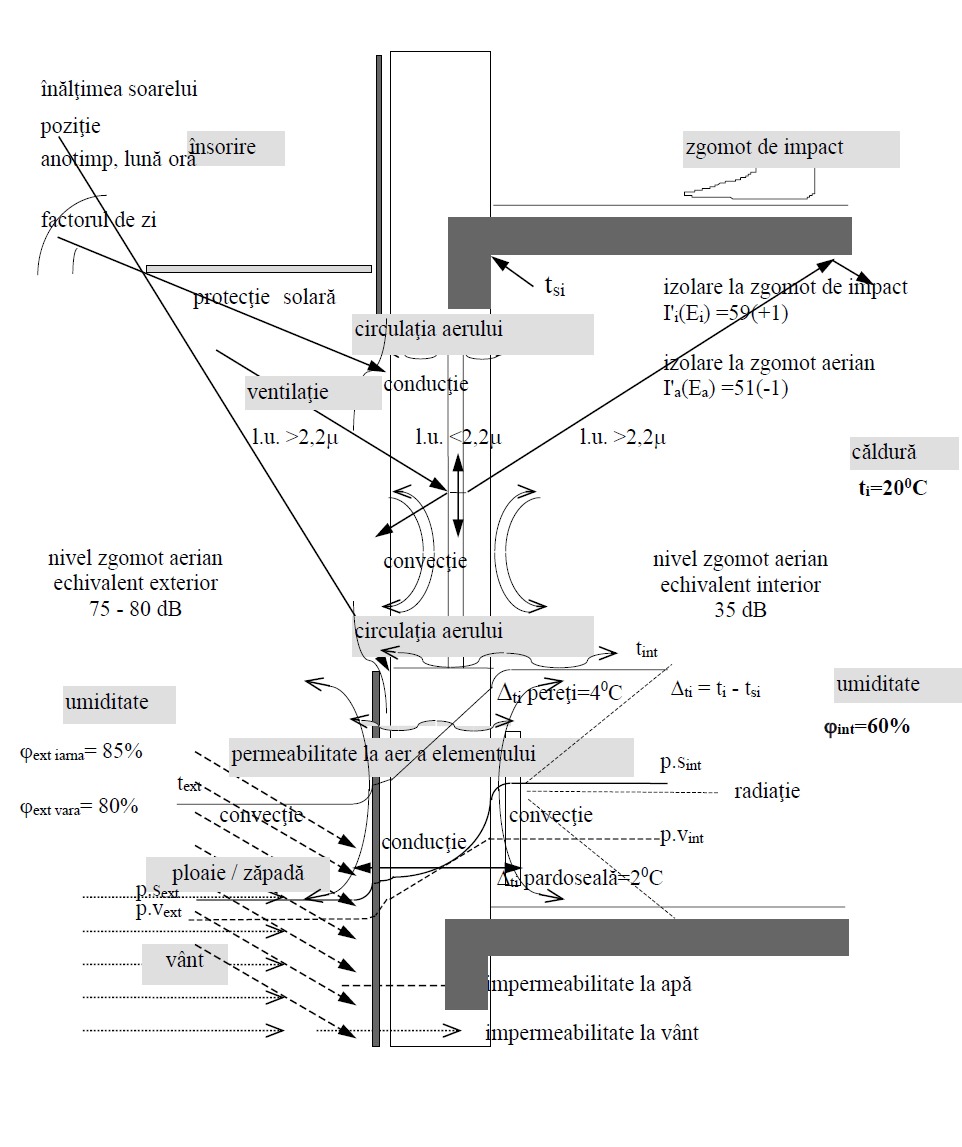
However, simply adding a green roof does not make a building eco-friendly; the approach should be holistic, from the spatial configuration to the building envelope and down to the finest details. And for that, we must (again!) understand building physics, recognize our limitations, and collaborate with specialists from other fields. This transdisciplinary approach is precisely what was discussed in the nZEB FROM THE ARCHITECT'S PERSPECTIVE: PASSIVE DESIGN STRATEGIES course, which complements the knowledge in this learning module.
On the other hand, we must also remember that humans are not the only builders on this planet. All living beings construct their own shelters, some more spectacular than others. Studying these natural structures can be both fascinating and useful for professionals. Designing and building in harmony with nature, integrating it into the architectural process, reinforces the importance of mastering the principles of building physics once again.
This course is not intended exclusively for architects but for all those involved in the process of constructing a building—designers, contractors, system manufacturers, students in technical faculties, and anyone curious to learn something new.
Principles and Methods