
As in most cases complex roofing systems – thermal-waterproofing roofing systems – are usually flat systems, with small slopes, they are usually not visible from the street level (unless the street is in the mountains or if we are standing somewhere above the roofs and see... from above the exhibition of terraces, more beautiful or uglier, depending on luck). That is why they have also been – very suggestively – called “the fifth facade of the building”.
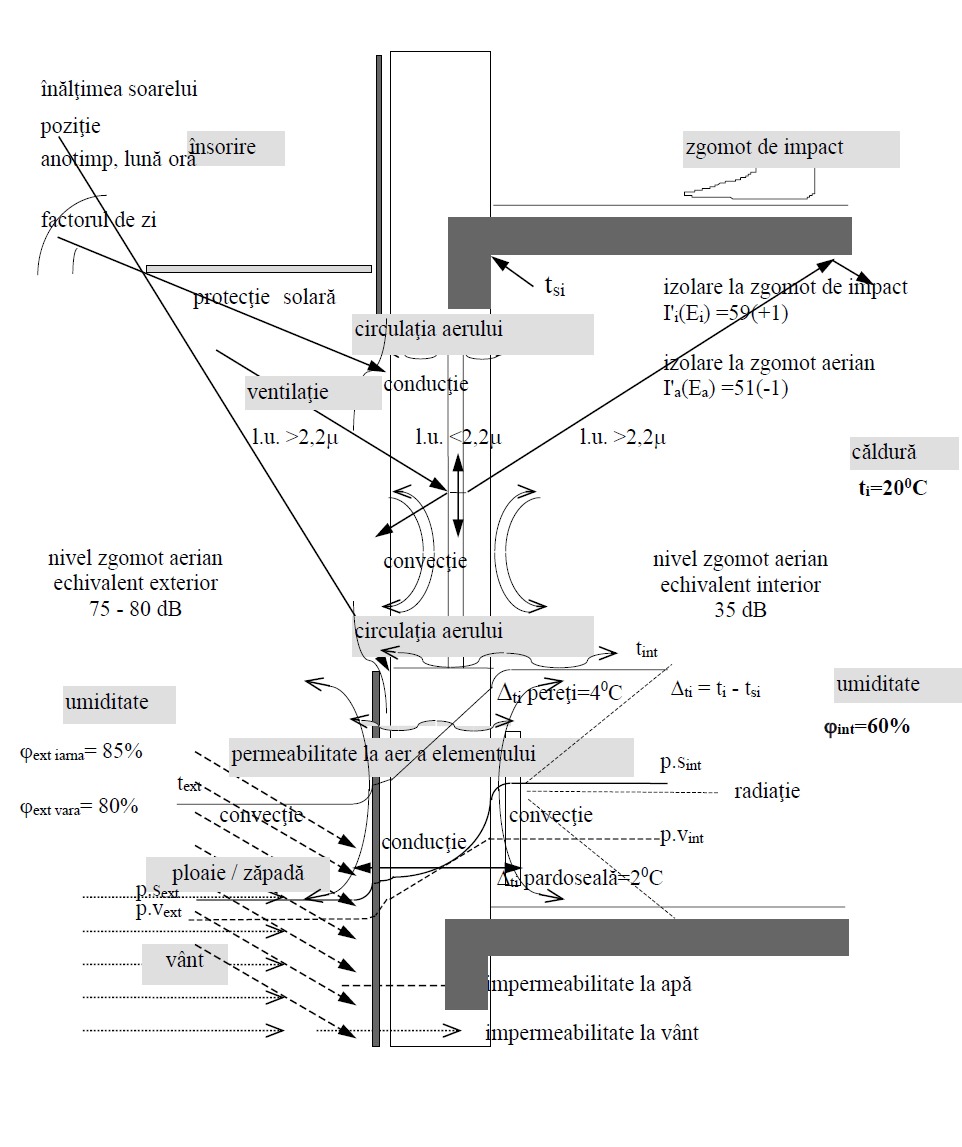
A very interesting component of a building’s envelope: the roofing system. It must meet the same requirements as the rest of the envelope:
Since, in most cases, the complex roof systems—thermo-hydro insulated roofs—are flat or low-slope systems, they are not visible from street level (unless the street is in the mountains or we are standing somewhere above the line of the roofs and we see… an exhibition of nicer or uglier terraces, depending on their luck). That is why they have been suggestively called "the fifth façade of the building." It is amusing because, when standing on one of these "façades," one can often admire... small trees, reeds, moss, and lichens that grew as no one bothered to go and maintain these assemblies. Carried by the wind, seeds fall and cling to any available environment, fighting for survival. And, as I often said in class, whatever grows upward also grows downward, tearing apart, with a force we don't suspect in some frail seedlings, the waterproofing.
The sometimes vast surfaces of flat roofs have also enabled, through specialized protective layer solutions, a new function: energy conservation and production.
True, this refers to the final layer, the one that is in contact with the environment. But what about the rest of the roofing assembly? All the layers, together, practically up to the inner face of the structural-supporting element, work together, by respecting the laws of physics, chemistry, biology (and I send you to join the courses of Building Physics), to ensure the role of these structures in ensuring the comfort of the indoor environment. Otherwise... I'll tell you what happens, in the Errors (Errare Humanum Est) course.
This course is not exclusively for architects but for all partners involved in the building process—designers, contractors, system manufacturers, technical university students, and anyone curious to learn more.